


Darling, No One Wants to Marry a Dark Girl: The Prevalence of Colorism in South Asia
‘Fair and Lovely’ is the epitome of beauty standards in South Asia. It also happens to be the name of the most lucrative “skin-whitening" brand in the region as its unmistakable pink-and-white packaging lines the shelves of any store you step into. In the matrimonial section of newspapers, you’ll find advertisements looking for potential partners who are “fair”, “white”, “not-dark” or even “pretty”. At the same time, skin-bleaching and “whitening” clinical treatments have skyrocketed in demand over the past few years, with a growing trade of toxic black-market products that promise the strongest permanent solutions to “unappealing” skin color. All of these point toward one particularly problematic aspect of South Asian society: internalized racism.
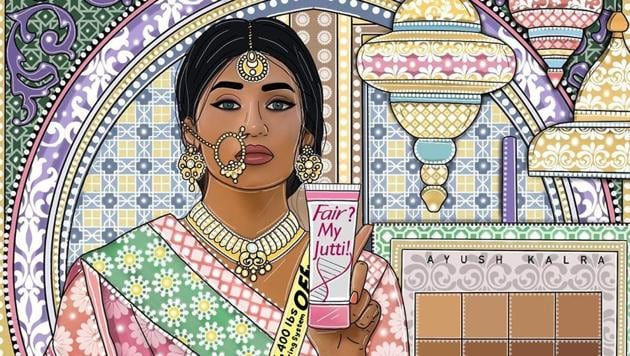
According to sociologist Karen D. Pyke, “internalized racism refers to the internalization or acceptance of racial stereotypes by the racially subordinate (those of a darker complexion).” In South Asia, the impact of internalized racism and colorism is so strong that multi-million dollar businesses have been established through the exploitation of consumer insecurities and desperation. At the fore-front of these were Unilever’s aforementioned ‘Fair and Lovely’ skin-lightening creams that garnered annual revenues of over half a billion US Dollars with their promise of a “lovelier” skin color.
But things took a turn in June 2020 when the ‘Black Lives Matter’ movement resurged; Hindustan Unilever announced that ‘Fair and Lovely’ would be rebranded to ‘Glow and Lovely’ in an effort to combat colorism. Was this a marketing gimmick or an instance of introspection and realization? While opinions vary, most agree that rebranding has had no impact on South Asia’s light-skin prejudice, especially given the ever-growing selection of skin-whitening substitutes that are fueled by the region’s inextricably deep-rooted culture of internalized racism.
The Origins of Colorism in South Asia
It’s critical to understand that colorism is a part of most, if not all, communities of ‘people of color’ (POC). The term POC clues us towards one of the most widely-accepted theories on the origins of colorism: colonization by white Europeans. The superiority-complexes and advanced technologies brandished by white colonizers of decades and centuries past led to a culture of dark-skinned “subservience” in colonized regions. In South Asia, this manifested in the form of skin color based wealth classes. Dutch and British colonizers, during the 18th and 19th centuries, used this system to determine who would be allowed to work in government, administrative and business leadership positions alongside them, typically favoring the lighter-skinned Aryan race over the darker-skinned majority. This resulted in wealth and income gaps between lighter and darker skinned individuals – particularly due to the disparity in access to educational and financial resources – as generational wealth and status were passed down to post-colonial years. The notion of “the lighter your skin, the wealthier you are” that this produced prompted internalized racism in contemporary, class-less society.
However historical accounts preceding the age of colonization, particularly from South Asia, depict traditions of colorism similar to those of today. This is most likely due to the Hindu caste system which places those with darker skin colors in the ‘Shudra’ caste of low-income laborers. The dominating Aryan race of lighter-skinned migrants from Persia and Northern India organized this caste system based on factors such as religion, skin color, occupation and wealth, with the general trend being that the lighter your skin color, the higher your caste. It is generally believed that it was this caste system that was exploited by colonizers in later centuries to cause racial and religious conflicts that allowed their colonization and takeover.
Why is this Important?
Understanding the impacts of colorism and internalized racism is vital in dismantling modern racist culture. This brings us back to ‘Fair and Lovely’. The brand has been exploiting people’s skin color insecurities for decades, amassing millions of dollars with promises of ‘beautiful, light skin’. Fair and Lovely’s ubiquitous advertisements, which always depict a model undergoing a miraculous transformation from dark, dull skin to blindingly bright, white skin, have been the most stark representation of this as the model changes from looking depressed to completely beaming after the skin lightening process.
How Can You Help?
Please remember to educate yourself and those around you of the dangers of colorism. Dismantling harmful societal norms is the only way to move forward in bringing about equality and abolishing racism. If you know any victims of colorism, encourage them to embrace their melanin richness and educate them on the internalized racism of those attacking them. Remember to uplift corporations and campaigns that promote under-represented individuals of a darker complexion. Your support matters.
Sources and References:
https://meridian-magazine.com/colourism-in-south-asia-a-neo-colonial-quest-for-profit/
https://digitalcommons.wayne.edu/cgi/viewcontent.cgi?article=1069&context=honorstheses
https://openscholarship.wustl.edu/cgi/viewcontent.cgi?article=1550&context=law_globalstudies
https://www.nytimes.com/2020/06/28/world/asia/india-skin-color-unilever.html
https://www.thejuggernaut.com/anti-blackness?s=ckba0m8ut09za07424pz9uvu3


Comments