


Ebrahim Raisi: Iran’s President-Elect
- Aug 8, 2021
- 10 min read
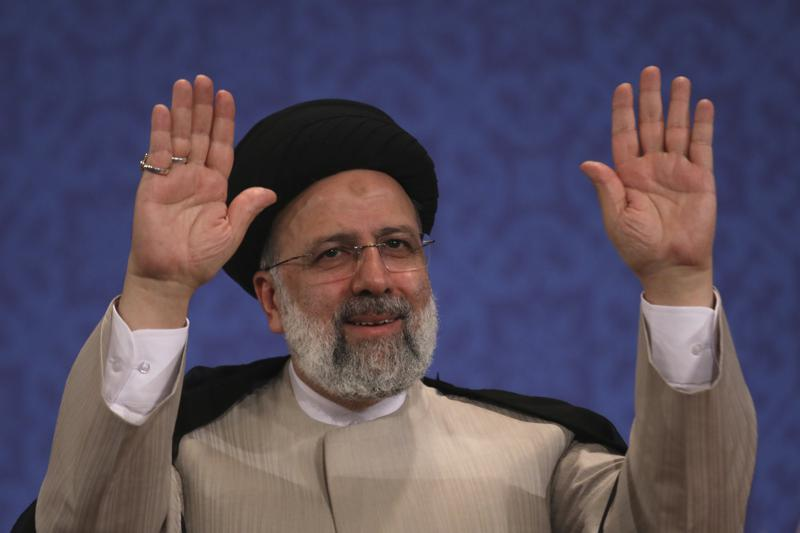
Credit: APnews (AP Photo/Vahid Salemi)
Described by many as the “hard-line candidate” in Iran’s recent presidential election, Chief Justice Ebrahim Raisi has clinched enough votes in the initial election that no runoff is required in an election with the lowest voter turnout since the constitution was adopted in 1979. Controversial for human rights abuses, Raisi was able to rise to power due to the support of Supreme Leader Ali Khamenei. He has taken a hard-line stance in nuclear policy, declining to hold meetings with President Biden. He demands US sanctions be lifted. Raisi’s victory and relationship with the Supreme Leader imply that he may succeed Khamenei, influencing Iranian politics for decades. This is Ebrahim Raisi, the next president of the Islamic Republic of Iran.
Iran’s Political System
The CIA World Factbook describes Iran’s government as a “theocratic republic.” The Council on Foreign Relations says it is “not quite a democracy, nor a theocracy”. Dictated in its Constitution of 1979, the Supreme Leader is the head of state, and the president the head of government. Article 110 of the constitution lays out the Supreme Leader’s powers and responsibilities:
“determining the overall politics of” Iran
“supervising” policies
“issuing referendums"
“commanding the armed forces”
appointing and dismissing various government actors
Guardian Council
Supreme Court
“president of the mass media” of Iran
“chief of the general staff”
“commander-in-chief of the Islamic Pasdaran Revolutionary Corps”
“supreme commanders-in-chief of the security and armed forces”
mediation/coordination of branches of government, resolving issues that cannot be settled by the Expediency Council
“signing the appointment of the President of the Republic, after his election by the public. The qualifications of the candidates for the presidency must be confirmed by the Guardian Council prior to the general elections and approved by the leader for the first term.”
“dismissing the President of the Republic, with regard to the best interest of the country, after either the Supreme Court has issued a ruling convicting . . ., or the Islamic Consultative Assembly . . . has cast a vote against his competence”
“Pardoning or reducing the sentences of convicts, within the framework of Islamic criteria, after the head of the judiciary power has recommended such a motion.”
The president is elected with support from the Supreme Leader. Raisi--a student of Supreme Leader Ali Khamenei--was able to garner the said support. Foreign Policy on 19 June described his rise to power. Sajjad Safaei detailed Raisis’s previous failure to win the presidency in 2017 against the incumbent Hassan Rouhani. Subsequently, he was appointed by Khamenei to lead the country’s judiciary, illustrating his favor with the Supreme Leader. As head of the judiciary and in other previously held judicial positions, Raisi garnered international concern over human rights abuses, so much so that the US has placed sanctions on him. Under Section 221 of the Iran Threat Reduction, Syria Human Rights Act of 2012 as well as the authority of the US President to publish a list of Iranian officials who, among other things, have committed human rights violations. Ebrahim Raisi was subject to immigration restrictions for “serious human rights abuses.” The 12 January state department report can be found here.
Despite human rights abuses, Raisi was able to garner enough support from voters to win the presidency without the need for any runoff elections. This, however, doesn’t necessarily translate to majority support by the citizenry as the 2021 election had the lowest turnout rates since the constitution of 1979 created the Islamic Republic. The Iran Data Portal provides a list of turnout rates of all presidential elections in Iran. With a turnout rate of 48.8%, less than half of eligible voters took part in the 2021 election. The next lowest turnout rates were in 1993 (50.66%), 1989 (54.59%), and 1985 (54.78%). All other elections had at least 60 % turnout. 2021 is the only election to date to have less than half of eligible voters turn up.
Why is turnout so low? Part of the issue is how presidential candidates are approved for the ballot. As detailed in the bold section of the constitution above, the Guardian council (“an unelected body [of 12 theologians] that has the ultimate decision with regard to candidates' qualifications,” BBC) approves candidates’ qualifications to the presidential ballot. That 19 June BBC description of the presidential process also reports that out of a field of “600 hopefuls,” only seven candidates were approved, three of which dropped out before election day. The Guardian Council, half of which are appointed by the Supreme Leader, approved such a limited field of candidates in an election that yielded less than half of eligible voters that the Supreme Leader’s student and appointee managed to win in one round of voting. As one of the three dropped candidates said, according to The Economist, the “sun, moon, and the heavens [aligned] to make one particular person the president.

Credit: WANA (West Asia News Agency) via REUTERS
What does this mean for Iran and the World?
In Iran, this election is indicative of the issues with entrenched theocracy. Though the country’s constitution sets out a democratic process for electing the president, the power of the Supreme Leader outbalances the people’s will. With the leader’s power to not only appoint half of the Guardian Council that approves presidential candidates but also to approve the winning candidate himself, Ali Khamenei has much control over the election to the presidency. The most democratic election is one in which the most people take part; however, due to limits placed by the Guardian Council, voters were discouraged.
Additionally, Iranians should be wary of the motives behind this. The power struggle won by Raisi and Khamenei could be indicative of plans for Raisi to succeed Khamenei. Should this happen, Khamenei’s supreme influence will continue to affect the Republic long after he is gone. Dr. Sanam Vakil for Chatham House spoke to this possibility on 21 June. She speaks to Raisi’s bureaucratic career, “building important relationships with . . . Supreme Leader Ali Khamenei.” According to her, having a loyalist in conjunction with “elected and unelected branches of government will enable the political establishment” to carry out a conservative agenda, including prioritizing the “looming issue” of Khamenei’s successor. A former CIA officer in Iran said that this election was always about who would succeed Khamenei and that Raisi has long been viewed as the next “overlord”. In just one election, Iran’s near future is deeply influenced, which will have shockwaves in the region and could influence global politics, including the nuclear policy of world superpowers.
Besides affecting Iranian politics for the coming years, the election of Raisi could also mean more human rights abuses for the Iranian people. So, what exactly are Raisi’s human rights abuses? Early on in the Republic, he served as prosecutor of Karaj, where execution by firing squad was common after his arrival. The former supreme leader would utilize Raisi for missions that needed “efficiency and cruelty,” as the Washington Post put it. A deputy supreme leader in a secret recording told the members of a “death commission” that “the greatest atrocity in the Islamic Republic, for which history will condemn us, has been committed at your hands, and in future, your names will go down in history as criminals.” A full report by Amnesty International on these human rights abuses can be found here (skip to page 101 for information about the recording). Ebrahim Raisi was one of four officials subject to this sentiment by the deputy leader. According to Amnesty International, Raisi claimed he was not in charge of sentencing executions as a prosecutor (that duty belonging to the head of the court), though his name is tied to this death commission, especially with the deputy leader’s words as context. The Washington Post reporters also quoted Raisi’s defense of the killings as “one of the proud achievements of the system.” Ebrahim Raisi is now chief executive and apparent successor to the supreme position of power in Iran.
As far as global effects go, Iran’s nuclear status stands to be a very contentious issue with the election of Raisi. According to AP News on 21 June, the president-elect has taken a “hard-line,” refusing to meet with President Biden to negotiate Iran’s ballistic missile program. Raisi reportedly promised to compromise in salvaging previous agreements so the US would relent on devastating sanctions. His hard-line position, however, will mean Iran is insisting on maintaining missile capabilities. Asked about the missile program, Raisi said, “it’s non-negotiable,” but he expects the US to “lift all oppressive sanctions against Iran.”
What must also be taken into consideration is the relationship between the positions of Supreme Leader and President prescribed in the constitution and the personal relationship between Ali Khamenei and Ebrahim Raisi. The former implies that the leader has control over domestic and foreign policy, which is executed by the president. The latter implies that the two positions are under the control of Khamenei, due to the longstanding protege-mentor relationship between the two. Additionally, the possibility of succession would keep the president from veering from the leader’s agenda. For the time being, Ali Khamenei will deeply influence the politics of Iran and subsequently the middle east, as well as impact global nuclear policy. This is the key reason why a nuclear policy shift is not expected. An Iran analyst named Henry Rome said the president will not be a “cheerleader for sizable investments from Western multinational firms, which do not have a place in Khamenei's vision of a resistance economy,” as interviewed by Golnaz Esfandiari. Ultimately, she said, “all eyes will be on Raisi's choice for foreign minister.”
Iran “will have interaction with the world. [It] will not tie the Iranian people’s interests to the nuclear deal,” the president-elect said. Perhaps, this could lead to economic improvement and stability for the citizenry. Or, it could lead to strained relations with other countries should the nuclear situation be a source of contention with nations like the U.S. who hold sanction power over Iran.
Conclusion
With massive influence over Iranian policy, the Supreme Leader is vested with several powers. These powers imbue him with strong influence over choosing the President, who chiefly executes broad policy decisions of the Supreme Leader. Due to a long-held relationship between Supreme Leader Khamenei and Ebrahim Raisi, Raisi was appointed to be head of the judiciary following a failed presidential campaign in 2017. In 2021, after hundreds of presidential hopefuls were not approved by the Guardian Council, a government body appointed in part by the Supreme Leader, many felt the election was decided before it began. With the lowest voter turnout in the history of the Islamic Republic of Iran, the 2021 election was won by Ebrahim Raisi, infamous for human rights abuses as part of a “death commission.” He will continue to carry out the policy of his mentor, the Supreme Leader, influencing global nuclear policy and hoping to secure economic stability following US sanctions. His election to the presidency also implies a strong chance of succeeding Khamenei as Supreme Leader, further dominating Iranian politics potentially for decades to come.
Edited by: Ashree Bhatta
How to Get Involved
A primary source of concern with this election is human rights abuses by the president-elect. Iranian citizens may face persecution and violations of their rights. Additionally, the discouragement of voters implies fading democracy. The power, influence, and supreme authority of the Supreme Leader threaten the ideals of democracy. Chiefly, continue to stand up for those at risk of having their rights violated.
This is a nonprofit organization that “promotes human rights to ensure a culture of respect for the human dignity and rights of all and to hold Iranian state actors accountable to their international obligations.” Support them through donations and use their website to learn more about the human rights situation in Iran. There are many tabs that deal with specific types of human rights abuses in Iran. This information could also benefit you to learn about how to help in other rights violation situations.
The NIAC gives a voice to Iranian Americans. It fosters the relationship between the two countries and promotes positive, meaningful discussion on Middle East policy. Its values are engagement, justice, respect, and transparency. Use the ‘take action’ tab to learn about their campaigns, find a chapter, become a member, or donate.
Petition your government officials and representatives
Speak directly to your government. Write letters, sign petitions, call your representative, and encourage them to speak up on these issues. The best way to help the Iranian people is to condemn human rights violations and subsequent failure by the Iranian government to stop those guilty from maintaining power.
Petition to end sanctions on Iran - “U.S. sanctions on Iran harm ordinary people, not the Iranian government. These crippling sanctions have robbed the people of their livelihood, violating individuals' right to health, making the Coronavirus pandemic more lethal, and causing unnecessary suffering and death.”
References
BBC. "Iran election: Hardliner Raisi will become president." BBC News, 19 June 2021, www.bbc.com/news/world-middle-east-57537027. Accessed 25 June 2021.
Buchta, Wilfried. "Who Rules Iran: The Structure of Power in the Islamic Republic." The Washington Institute, 1 Jan. 2000, www.washingtoninstitute.org/policy-analysis/who-rules-iran-structure-power-islamic-republic. Accessed 22 June 2021.
Bureau of Near Eastern Affairs, Department of State. Report to Congress on Identification of, and Immigration Restrictions on, Senior Officials of the Government of Iran and their Family Members. Government Publishing Office, 12 Jan. 2021. State.gov, www.state.gov/report-to-congress-on-identification-of-and-immigration-restrictions-on-senior-officials-of-the-government-of-iran-and-their-family-members/. Accessed 25 June 2021.
CFR.org Editors. "The Islamic Republic's Power Centers." Center on Foreign Relations, 25 Feb. 2020, www.cfr.org/article/islamic-republics-power-centers. Accessed 22 June 2021.
"Constitution of the Islamic Republic of Iran." World Intellectual Property Organization, 3 Dec. 1979, www.wipo.int/edocs/lexdocs/laws/en/ir/ir001en.pdf. Accessed 22 June 2021.
Debre, Isabel, and Jon Gambrell. "Iran president-elect takes hard line, refuses to meet Biden." APNews, 21 June 2021, apnews.com/article/iran--president-elect-ebrahim-raisi-biden-63db1fbbdb1ff9fe40aca40f3f8046a2. Accessed 25 June 2021.
The Economist. "Iran has rigged its election to favour Ebrahim Raisi, a hardliner." The Economist, 12 June 2021, www.economist.com/middle-east-and-africa/2021/06/12/iran-has-rigged-its-election-to-favour-ebrahim-raisi-a-hardliner. Accessed 25 June 2021.
Esfandiari, Golnaz. "What Iranian Foreign Policy Could Look Like Under President Raisi." Radio Free Europe/Radio Liberty, 17 June 2021, www.rferl.org/a/iran-presidential-election-raisi-foreign-policy/31313258.html. Accessed 25 June 2021.
Gerecht, Reuel Marc, and Ray Takeyh. "Ebrahim Raisi's Path to Iranian President - and Likely Future." Washington Post, 25 June 2021, www.washingtonpost.com/opinions/2021/06/25/ebrahim-raisi-khamenei-iran-president-supreme-leader/. Accessed 25 June 2021.
Golkar, Saeid. "Ebrahim Raisi: The cleric who could end Iranian hopes for change." Aljazeera, 5 Jan. 2019, www.aljazeera.com/opinions/2019/1/5/ebrahim-raisi-the-cleric-who-could-end-iranian-hopes-for-change. Accessed 25 June 2021.
"Iran." CIA World Factbook, 15 June 2021, www.cia.gov/the-world-factbook/countries/iran/#government. Accessed 22 June 2021.
"Iran: Blood-Soaked Secrets: Why Iran's 1988 Prison Massacres Are Ongoing Crimes Against Humanity." Amnesty International, 4 Dec. 2018, www.amnesty.org/download/Documents/MDE1394212018ENGLISH.PDF. Accessed 25 June 2021.
"Iran's foreign policy will not be limited by 2015 nuclear deal: Raisi." Alarabiya News, 21 June 2021, english.alarabiya.net/News/middle-east/2021/06/21/Iran-s-foreign-policy-will-not-be-limited-by-2015-nuclear-deal-Raisi. Accessed 25 June 2021.
"Presidential Elections." Iran Data Portal, June 2021, irandataportal.syr.edu/presidential-elections. Accessed 22 June 2021.
Safaei, Sajjad. "Ebrahim Raisi Isn't Who You Think He Is." Foreign Policy, 19 June 2021, foreignpolicy.com/2021/06/19/the-misunderstood-ebrahim-raisi/. Accessed 25 June 2021.
Vakil, Sanam. "Ebrahim Raisi: Iran's proxy president." Chatham House, 21 June 2021, www.chathamhouse.org/2021/06/ebrahim-raisi-irans-proxy-president. Accessed 25 June 2021.


Comments