


Government, God, and Society
- Apr 13, 2021
- 5 min read
Throughout history, leaders of societies across the world have used religious narratives and traditions in an attempt to assign a meaning to life and understand the complexities of the universe. While religion can be viewed as highly personal, some form of religion is found in every known culture. Thus, religion is a social institution. It exists as an organized and integrated set of beliefs, behaviors, and norms centered on basic social needs and values. Despite consensus among political theorists and practical political contexts on the right to freedom of conscience and the need for some degree of separation between church and state, religion often makes strong claims on people's allegiance.
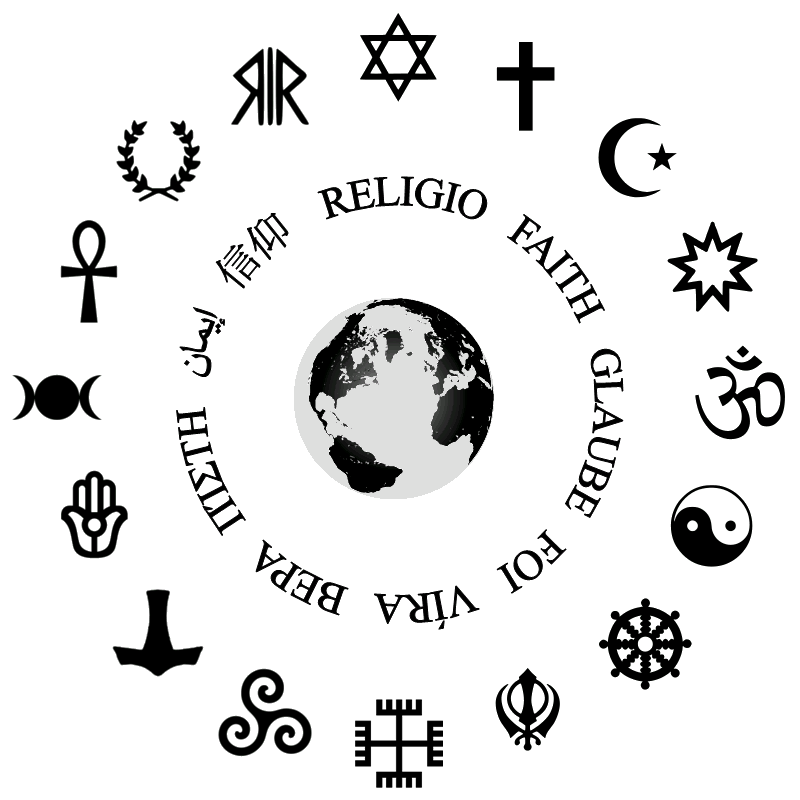
The intersection between politics and religion brings about much debate as many religious principles often infringe on others' human rights when incorporated into politics and have historically played a part in the suppression of minorities. For example, religious arguments are commonly presented in reasons against women's rights and those belonging to the LGBTQ+ community concerning abortion, leadership roles for women in religious settings, and gay marriage. Political policy coincides with many ideas central to faith, such as charity, togetherness, and enabling family life to be economically viable. These virtues can be inserted into politics and society. However, the politicization of religion and religious collaborators with political power has led the two to become entangled in a way that becomes dangerous when a policy to appease is exchanged for others' lives and rights.
Key thinkers on the impact of religion on society
Industrialization and secularisation in 19th century Europe sparked social scientists' beginning examining the impact that religion has on society in both economic and social settings. Key thinkers in this field are Emile Durkheim, Max Webber, and Karl Marx. Despite competing ideas between the founding thinkers, all believed in the integral and central part of religion in society. Organized religion remains the most prevalent force in society in many parts of the world; more than 4.5 billion people identify with one of the world's four biggest religions. In this way, the societal impact that religion has on society is still very much relevant.

Emile Durkheim – religion as a social power
Durkheim is generally considered to be the first sociologist who analyzed religion in terms of its societal impact. He believed religion was about three things: social cohesion, social control, and meaning/ purpose. The source of religion and morality is society's collective mindset; the cohesive bonds of social order are derived from a society's common values. He contended that these values are fundamental to maintain social stability. The question of 'what would happen if religion were to decline?' laid the foundation for modern sociologists' work regarding religion being a social power. When this question was posed, Durkheim determined that religion is not just a social creation but also empowers a society; when people celebrate sacred things, they celebrate their society's power in unity. Thus, society wouldn't necessarily dissolve even if traditional religion were absent.

Max Webber – an economic approach
Webber was a German sociologist and political thinker. His concept of religion in society revolves around it being a precipitator for social change. Whereas Durkheim presented a more sociological perspective, Webber focuses on the effects of religion on economic choices. His work was predicated on the economic activities of heavily Protestant societies such as England, Germany, and the Netherlands. He found these societies were the most advanced capitalist societies. In his writing The Protestant Work Ethic and the Spirit of Capitalism (1905), he contends that the Protestant work ethic influenced capitalism's development. Weber noted that certain factions of Protestantism supported the pursuit of material gain by motivating believers to work hard, be successful, and not spend their profits on frivolous things. These values influenced the rise of capitalism and contributed to the creation of the modern world order. However, the concept of work ethic has evolved with society. The work ethic of the modern workforce has been transformed, as more decision making is required. Employees seek autonomy and fulfillment in their jobs. Routinised roles result in discouragement. In these roles, workers have little opportunity to make decisions. Thus, they are considered replaceable commodities as opposed to valued employees.

Karl Marx – religion as a tool of oppression
German philosopher and revolutionary socialist Karl Marx profoundly impacted the link between religion and political ideologies. He considered religion inseparable from the economy and the worker. Religion could not be fully understood apart from the capitalist society that perpetuates inequality. He believed that religion reflects society's social stratification and maintains inequality, and conserves the status quo. Marx concluded that religion is an extension of the proletariat's economic suffering. However, it is a tool used by capitalist societies to maintain a class system. Marx's most renowned dictum is "religion is the opium of the people." Marx believed religion had practical functions in society similar to opium: it reduces people's immediate suffering and provides pleasant illusions aiding strength. In the same way that opium can be harmful, he believed religion to be harmful to his revolutionary goals. It prevents people from seeing the class structure and oppression around them.
Theoretical perspectives
Modern sociologists and scholars apply two major paradigms: functionalism and conflict theory. These views offer different lenses to further understand religion in society and, thus, politics.

Functionalism
Functionalists contend that religion serves several functions in society. Religion and society are codependent on one another for existence. Taking this view, religion provides answers to spiritual mysteries, offers emotional comfort, and creates a place for social interaction and social control. The most important function of religion – taking a functionalist perspective – is social interaction and the opportunity to formulate groups. It provides social support and social networking while offering a place to meet others who hold similar values. Correspondingly, it fosters group cohesion and integration. Because religion is often central to people's concept of themselves, it can create an "in-group" vs. "out-group" feeling towards those of other religions or those with no religion. As it is such a central concept, it is no surprise that political parties can capitalize on this and hold certain religions at the core of their values to appeal to the electorate sections. This is bolstered by religion's social norms, such as regulating sexual behavior and an appropriate dress style.
Conflict theory
Conflict theorists view religion as an institution that contributes to the maintenance of patterns of social inequality. The Vatican can be taken as an example of this as it hoards a tremendous amount of wealth. At the same time, the clergy's average income is small in the vast amount of circumstances. On the authority of this theory, religion has been used to support oppressive monarchs' divine right. In the justification of unequal social structures, this can be applied to India's caste system. Conflict theorists critically analyze how many religions advocate that believers should be satisfied with existing circumstances because they are divinely ordained. This power dynamic has been used by Christian institutions for centuries to reinforce the poverty cycle and teach people that they should not be concerned with what they lack because their true reward will come after death. Conflict theory also emphasizes religious leaders often being able to dictate practices and beliefs through their interpretation of religious texts or proclaimed direct communication from the divine. Again, this concentrates power in a few individuals' hands rather than collectively and can be argued to discourage free thought.
Conflict theory – a feminist perspective
The feminist perspective of conflict theory focuses specifically on gender inequality. In terms of religion, women typically socialize children into religion despite traditionally holding very few power positions within religious institutions. It can be counter-argued that more religious dominations are more gender-equal; however, male dominance remains the norm in most. The infringement of women's rights and empowerment remains a feature of many religions. For example, the idea of sexual abstinence is often perpetuated for women in religions. The concept of virginity reinforces that a man holds power to change a woman's worth. Although this is arguably an outdated concept, it is still preached to young girls.
How to help
Sources


Comments