


How COVID-19 Vaccine Distribution is impacting Low-income Countries
The introduction of vaccines:
The first COVID-19 vaccine in the UK was administered in early December 2020. As of 11 March 2021, 335.44 million doses of the COVID‑19 vaccine have been administered worldwide. But, according to previous estimates from the Duke Global Health Innovation Center, many people in low-income countries may have to wait until 2023 or even 2024 until they receive a vaccine.
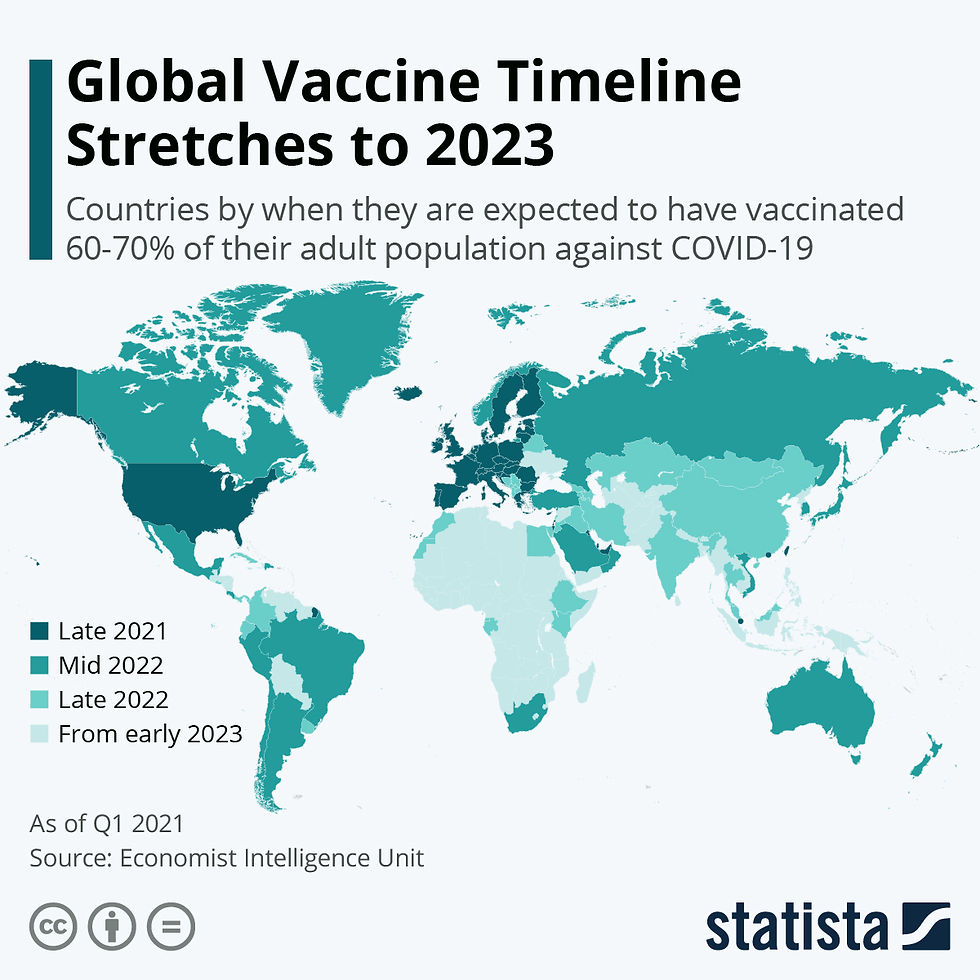
Scientists made statements that for maximum efficiency everyone should receive the vaccine at a similar time. Even with progress and new schemes arising since, it is still very likely that whilst residents of first world countries will receive vaccines at the beginning of 2021, third world country residents will have to wait until late 2021 or later.
The over subscription:
In 2020, many first-world countries overstocked on pre-ordered vaccines, with Canada leading at worst, ordering almost 9 doses of the vaccine per person. Only two are needed for efficiency. This may seem harmless but this unnecessary over subscription is costing third world countries.
High-income countries currently hold a confirmed 4.2 billion doses, while low-middle income nations hold 670 million, according to research by the Duke Global Health Innovation Center.
Scientists predicted that thankfully by the end of 2021, a third of the world population will have been vaccinated. However, it’s likely that this will be disproportionately divided, with the majority of those not vaccinated being from third-world countries.
The Covax scheme:
Luckily, a new scheme called the Covax scheme has recently been implemented to ensure the distribution is as even as possible, and that all who need a vaccine can have access. The scheme is led by the World Health Organization (WHO) and also involves the Global Vaccine Alliance (Gavi) and the Coalition for Epidemic Preparedness Innovations (Cepi).
It aims to ensure 92 poorer countries will receive the vaccines at the same time as 98 richer countries. The first country to receive vaccines under this scheme was Ghana, where a total of 600,000 doses arrived in the capital of Accra, in late February.
Covax raised £4.3bn ($6bn) for this scheme but will need another $2bn to meet its 2021 target. The US has pledged a total of $4bn in aid and the U.K. government £548m ($734m). This was one of Biden’s first acts in office.
There is not only this scheme in place to help, but the U.K, who ordered a surplus of vaccine doses (400m total) has agreed to donate the extra supply to low income countries. It is predicted that other countries will follow along this path. COVID is a global crisis and hopefully, we will all have the resources to overcome it; no matter our income.
Sources:


Comments