


Misogyny in the film industry - the male and female gazes
Editor - Amy Quinn
What are the male and female gazes?
The male gaze is likely something you’ve heard of before. In short, it’s a feminist theory which means the act of depicting women and the world, in visual arts such as film, or literature, from a male (heterosexual) perspective that presents and represents women as sexual objects for the pleasure of themselves (heterosexual males). If you imagine a movie scene where the women was degraded to be nothing more than a sex symbol or object, that is most likely as a result of the male gaze. A man has presented the woman in this way as it appeals to him.

The concept was first used by John Berger, an English art critic, in Ways of Seeing, a series of films for the BBC aired in January 1972, and later a book, as part of his analysis of the treatment of the nude in European painting. It soon became a popular concept among feminists, including Laura Mulvey, who used it to critique traditional media representations of the female character in cinema.
Filmmakers commonly make attempts at giving the women extensive backstories to develop them as a character rather than an object but in the majority of films, but it is still commonplace for the female character to be the one looked at and the male character to be the person who looks, confining to the male gaze.
This is the most commonly known gaze as it impacts the portrayal of women and also the actions of women. In some ways, the male gaze is presented to be how women act to please men, even though this may not necessarily be their goal, because the women in the media have been presented to act in this way.
However, there is not only a male gaze, there is also a female gaze. This is inherently the opposite and a response to the male gaze theory. So, the female gaze is a point of view that counteracts the male gaze, depicting the characters or film (etc) from an unmistakably female vantage point. It seeks to emphasise rather than objectify and has appeared more often in recent films such as ‘The Portrait of a Lady on Fire’.

Examples of each
Although Mulvey’s theory of the male gaze was created many years ago, we still see this objectification in the majority of films. It was only in 1975 when this misogyny went from something commonly and simply accepted to something which was questioned.
Mulvey believes that women are in fact “the bearer of meaning and not the maker of meaning,” which suggests that women are not placed in a role where they can take control of a scene, instead they are simply put there to be observed from an objectified point of view.
There have been multiple studies on this theory and how it still exists today, from statistics like women leaders being 20% more likely to wear revealing clothes in films. This objectification can also lead to women themselves constantly feeling like they have to appeal to the eye of men, even though they might not realise it.
The 2017 film ‘Wonder Woman’ was seen as ground-breaking as the first female superhero film. However, her male peer Steve had almost as much, if not more, screen time in the film.
There are also many common tropes in film that conform to this with the ‘makeover’ that occurs for many, many women to make them conventionally attractive for the viewers, then typically showing reactions of the male characters, presents being beautiful in not an empowering way but rather as the only way to appeal. Through hidden messages like this, it could be interpreted that this is why women become so fixated on appearance.
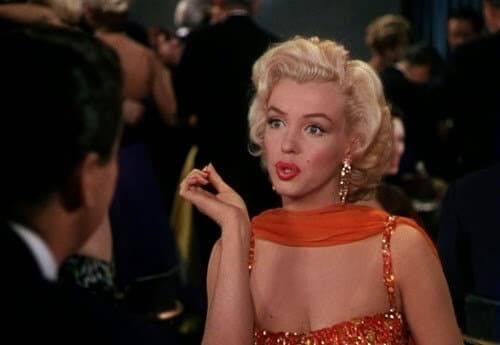
Is the female gaze ‘better’?
Whilst the female gaze shows women in a much more personified way, depicts female struggles and shows them as real people; with many ‘female gaze’ films having beauty as a minimal importance to the narrative, is the female gaze inherently better? After all, doesn't it only show the film from a female perspective?
Women only account for 2 percent of producers, 19 percent of executive producers, 16 percent of editors, 11 percent of writers, 11 percent of directors, and 4 percent of cinematographers. The industry is extremely oversaturated with men. But the female gaze does not work to show men in the way women are, it works to show women in a far more humanising way.
In 2016, creator Jill Soloway spoke about the challenge of defining the female gaze at the Toronto International Film Festival. She argued that the female gaze is really about ‘using the presence of a female perspective on screen to emphasize the story’s emotions and characters’. It shows what women see and experience, while the male gaze focuses on what men see (typically in women).
We have a long way to go in changing the presentation in the media but if you’re conflicted on whether the female gaze is a good thing, it is. The female gaze is what we should strive for in the film industry, and with more and more emerging female creatives, it is appearing more and more.
Sources:


Comments