


Obamacare - The ACA
Credit: Lincoln Agnew
What is “Obamacare”?
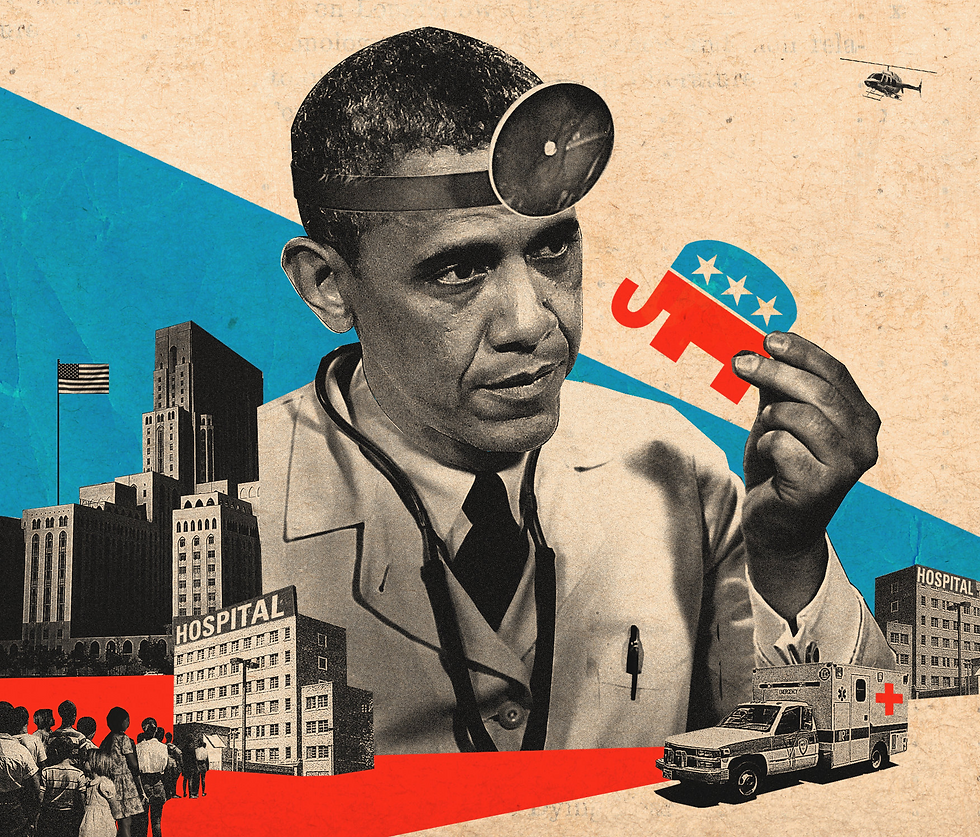
The Affordable Care Act (ACA), otherwise known as Obamacare, is the name for the comprehensive health care reform law and the amendments made to it. This law addresses health insurance coverage, health care costs, and preventive care. The ACA was enacted in two parts: first, the Patient Protection and Affordable Care Act was signed into law on March 23, 2010, and was amended by the Health Care and Education Reconciliation Act on March 30, 2020, both under the Obama Administration.
According to Statista, the total number of those enrolled in Medicaid (part of the ACA) was 73.9 million. In 2010, President Barack Obama and Congress created Obamacare to make sure that all Americans would have access to affordable health care. It also lowered the cost of Medicare and Medicaid. If individuals apply for Obamacare, they can have their health insurance covered by the government and be protected from insurance companies' discrimination against “pre-existing conditions”. Obamacare can prevent insurance companies from dropping patients, and forcing insurance companies to spend at least 80% of premiums on providing actual medical services. The essential role of Obamacare is to regulate Medicaid and Medicare which offer insurance as well as ensure that people can afford health insurance.

Source: CNN
Challenges to Medicare
Since 2010, the ACA has had many challenges, particularly during the Trump Administration and whenever Republicans had control of the Senate and the House. It has also been challenged various times for its constitutionality in the courts.
Congress
Republicans have shown aggressive opposition to the ACA in Congress; Newsweek found that there had been at least 70 Republican-led attempts to repeal, modify, or hurt the Affordable Care Act as of 2017. However, no attempt has ever successfully repealed Obamacare as a whole. Obamacare has specifically been in serious trouble of being repealed during the 2015-2017 term of Congress when both the Senate and the House of Representatives were Republican-run and during the 2017-2019 term when both Houses of Congress and the White House were controlled by Republicans. The only reason that the ACA was not repealed during the Trump era was due to moderate Republicans like John McCain and Susan Collins.
The most famous attempt to repeal Obamacare was in July 2017. An effort to repeal the ACA had been passed by the Republican-controlled house and had 49 Republican votes with 1 more needed to pass the repeal of Obamacare. Late Republican Senator John McCain was the one vote that the Republicans needed to repeal the ACA successfully. According to the Congressional Budgeting Office, this vote would have resulted in 16 million people losing their health insurance by 2026 with insurance premiums increasing by 20%. Right before the final votes were officially taken, some moderate Republicans who were voting against the repeal approached McCain and discussed the repeal. This led to Sen. McCain approaching the center of the Senate floor and giving a dramatic thumbs down to the Senate clerk. This attempt was the closest that Republicans have gotten to repealing the ACA, and it led to some major rage from President Trump towards the Republicans.
Supreme Court
The first time that the ACA survived an encounter was in 2012 when it was barely saved with a 5-4 decision. Since that decision, conservatives have aggressively tried to get the ACA to be announced unconstitutional. Usually, the attempts to get rid of the ACA fail due to Chief Justice Roberts voting with the liberals or from severability, the removal of only one unconstitutional part or clause of law while keeping the rest of the law intact. Because Former President Donald Trump has made it one of his top priorities to repeal the ACA, he has promised to appoint Supreme Court nominees that will “do the right thing” and vote against the ACA if it comes up in a case before them. Former President Trump has tried to follow through on this promise by appointing 3 conservative Justices to the Supreme Court: Justice Gorsuch, Justice Kavanaugh, and Justice Barrett. These nominations raised the conservative majority on the court to 6-3 which was justified in the eyes of Former President Trump as he had criticized Chief Justice Roberts about saving the law prior. The confirmation of Justice Barrett was actually a large event in the life of the ACA, as many Democrat Senators argued that she would strike down the ACA if she was confirmed and deny millions of people healthcare.
The most recent case that put these conservative Justices to the test in November 2020. In the case California v. Texas, the ACA was challenged by Texas and its Attorney General, but the law was not ultimately struck down as the conservative Justices agreed on severability and to keep most of the law intact. Currently, the Supreme Court remains the most dangerous place for the ACA as it continues to be majority conservative while the House and Senate are both run by democrats.

Credit: Andrea Levy, AdvanceLocal
Views on the ACA
Moderate Democrats- Moderate Democrats like President Joe Biden are strongly in favor of the ACA and even helped pass it in 2010. Because Moderate Democrats like President Joe Biden and Speaker Nancy Pelosi control most of the legislative and Executive Branches of government, the ACA will probably remain a law for the foreseeable future.
Progressive Democrats- Progressive Democrats tend to be in favor of the idea of helping the public afford healthcare but leaning more towards socialized medicine and providing free health care. The most prominent example of a Progressive Democrats view of the ACA is Senator Bernie Sanders of Vermont who opposes the ACA and instead supports Medicare for All, and socialized medicine.
Republicans/Conservatives- Republicans have tried to repeal the ACA for years based on arguments of saving taxpayers money from the taxes that the ACA requires or a debilitating effect that the ACA has on the government deficit. According to the Congressional Budgeting Office, the ACA will increase the federal debt by 13% by 2050. Republicans have often stated that they have an alternative healthcare plan other than Obamacare which until recently, was not true. Now, the Republican-alternate plan is a scaled, down lesser version of the ACA with less protection for individuals.
What You Can Do to Help!
As is true with most legislative issues, the best way to help with the future of the ACA is to contact your representatives or advocate for a certain outcome. Whether you support the ACA or not, the best way to see change would be to write a letter, email, or call your Senator. Advocating through social media will also spread awareness of the ACA. Helping keep other people like parents or guardians of Obamacare may also be helpful as well. Try to educate yourself and advocate for the change that you want to see!
Works Cited
(DCD), Digital Communications Division. “What Is the Affordable Care Act?” HHS.gov, 4 Aug. 2017, www.hhs.gov/answers/affordable-care-act/what-is-the-affordable-care-act/index.html.
“The 2020 Long-Term Budget Outlook.” Congressional Budget Office, 21 Sept. 2020, www.cbo.gov/publication/56516.
Abrams, Abigail. “Biden Opens ACA Enrollment And Reviews Trump Health Policies.” Time, Time, 29 Jan. 2021, time.com/5934214/biden-aca-trump-health-care-policies/.
Amadeo, Kimberly. “Obamacare: Simple Enough to Explain to Your Kids.” The Balance, 29 Oct. 2020, www.thebalance.com/obamacare-explained-3306058.
Brownstein, Analysis by Ronald. “Sanders Sharpens the Choice Democrats Face on Health Care - CNN Politics.” CNN, Cable News Network, 2 Apr. 2019, www.cnn.com/2019/04/02/politics/health-care-affordable-care-act-democrats-bernie-sanders/index.html.
Gdiesing. “Republican Study Committee Unveils ACA Replacement Plan: AHA News.” American Hospital Association | AHA News, 22 Oct. 2019, www.aha.org/news/headline/2019-10-22-republican-study-committee-unveils-aca-replacement-plan.
Liptak, Adam, and Abby Goodnough. “The Affordable Care Act Faces Another Supreme Court Test.” The New York Times, The New York Times, 8 Nov. 2020, www.nytimes.com/2020/11/08/us/obamacare-aca-supreme-court.html.
Luhby, Tami. “The Future of Obamacare Is at Risk Again. Here's What's at Stake.” CNN, Cable News Network, 10 Nov. 2020, www.cnn.com/2020/09/21/politics/supreme-court-obamacare-affordable-care-act/index.html.
Riotta, Chris. “GOP Aims to Kill Obamacare Yet Again after Failing 70 Times.” Newsweek, Newsweek, 29 July 2017, www.newsweek.com/gop-health-care-bill-repeal-and-replace-70-failed-attempts-643832.


Comments