


The Harmful and Homophobic LGBTQ+ Defense

© The Los Angeles Times
Although tolerance towards the LGBTQ+ community has increased, society has historically discriminated against the queer community in most facets of their life. It's no surprise that they also face discrimination in the courtroom through the existence of LGBTQ+ panic defense.
What is the LGBTQ+ panic defense?
The LGBTQ+ panic defense is a defense strategy in which a person claims that his violent act was in response to a same-sex pass or an attempted sexual assault. It is based on prejudice and legitimizes violent behavior against members of the LGBTQ+ community, taking their sexual orientation and/or gender identity and using it against them. Despite being inherently homophobic, the LGBTQ+ panic defense is banned only in a handful of states in the US and other countries.
This legal strategy has three variations, each variation having its own argument. The defense of insanity or diminished capacity argues that the victim’s sexual orientation and/or gender identity is to blame for the defendant’s panicked behavior. The defense of provocation claims that the victim’s non-violent sexual advance was provocative and induced the defendant to act violently. Lastly, self-defense argues that the victim would inflict serious bodily harm because of their sexual orientation and/or gender identity. If the LGBTQ+ panic defense works, the defendant’s sentence may be reduced from murder to manslaughter, or from attempted murder to assault, and they could spend less time in prison.
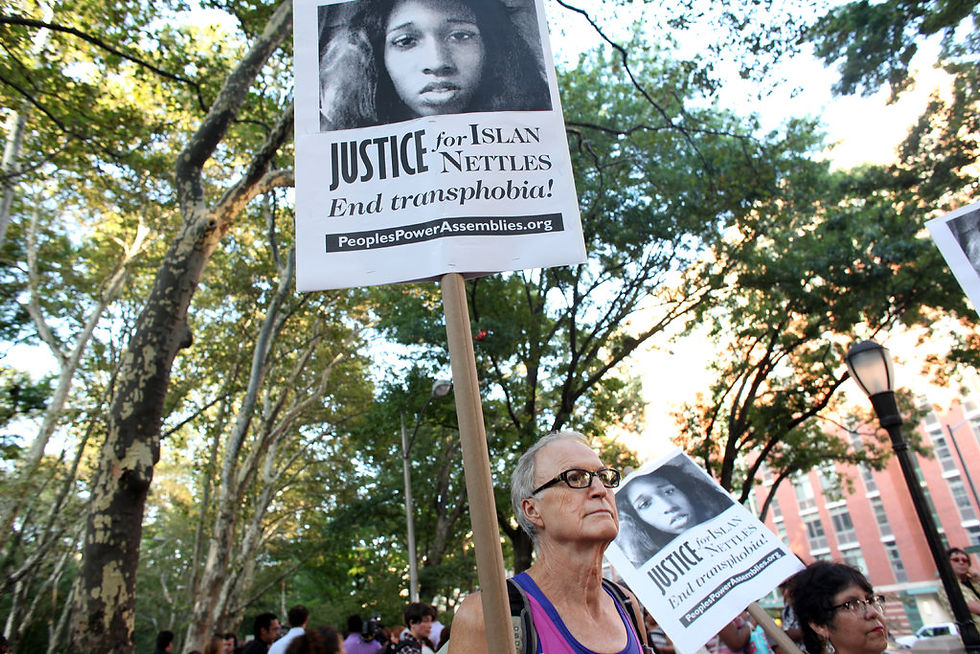
A protest involving a case of gay panic” or “transgender panic” defense came after a transgender woman, Islan Nettles, was beaten to death in Harlem in 2013.
© Yana Paskova for The New York Times
Why is it harmful?
The defense has been used since the 1950s in court cases, typically by cisgender, heterosexual men against gay men or trans women. It originated in a period when homosexuality was still widely not tolerated in society. Many of the cases where the defendant used the panic defense featured them violently murdering the victim because they were uncomfortable with their so-called “sexual advances,” even though more often than not, this was an excuse for disguised homophobia/transphobia. Some of the murders were particularly brutal, and perpetrators have stated that they “freaked out [or] got scared” (as in State v. Lowe, Nebraska 1993). Sometimes, the defendant claimed that his past trauma is to blame for his extreme reaction in response to the victim’s actions, in which the defendant acted without rational judgment and panicked. Ultimately, the LGBTQ+ panic defense implies that an LGBTQ+ person’s life is worth less than others.

All across the world, classes specifically targeting those of the LGBTQ+ community are being offered to educate those on self defense. © Ana Julia
Current Status of the LGBTQ+ Panic Defense
Currently, the defense strategy is banned in California, Illinois, Rhode Island, Connecticut, Hawaii, Maine, Nevada, New York, and most recently in New Jersey, Washington, and Colorado (this year). A handful of other states are considering banning it as well. In 2019, the New York Bill stated that a person’s sexual orientation and/or gender identity is not a legitimate excuse and does not provide a reasonable explanation to reduce charges. If more and more states follow suit, the LGBTQ+ community could be more adequately protected in court.
© GIPHY
What can you do to help?
We must show solidarity to the LGBTQ+ community, who still face discrimination and violence in society today. By supporting legislative bans to prohibit the use of the LGBTQ+ panic defense strategy in court, we can help to end this discrimination. We can contact legislators and governors to advocate that equality under the law should apply to all victims of hate crimes, as well as support organizations that work to protect the rights of LGBTQ+ people. Showing support for LGBTQ+ organizations and spaces, such as the LGBT Bar and the American Bar Association’s Commission on Sexual Orientation and Gender Identity, are also great ways to show solidarity to the community.
In states that are considering banning the LGBTQ+ panic defense, letting your voice be heard and advocating for the ban is essential. In states where the government is not considering the ban, raising awareness of this issue is critical and will allow supporters to band together, hopefully leading to legislators taking action.
Here are some petitions you can sign:
Ban the LGBTQ+ Panic Defense, (Change. Org)
Support Law to End Homophobic 'Gay Panic' Defense, (Care2 Petitions)
Sources:


Comments