


The Red Scare

History of the Red Scare
The Red Scare primarily portrays two periods in U.S. history in which alleged communism and other left-wing movements were cracked down on by the U.S. The first occurred after World War 1, as the Bolsheviks took over in Russia, fear spread worldwide about communism. At the same time, in the U.S., labor strikes were on the rise, which led to governmental action against leftists, including the Sedition Act. The Sedition Act imposed penalties on anyone advocating against America’s involvement in World War 1, such as disrespecting the flag, the constitution, or the military.
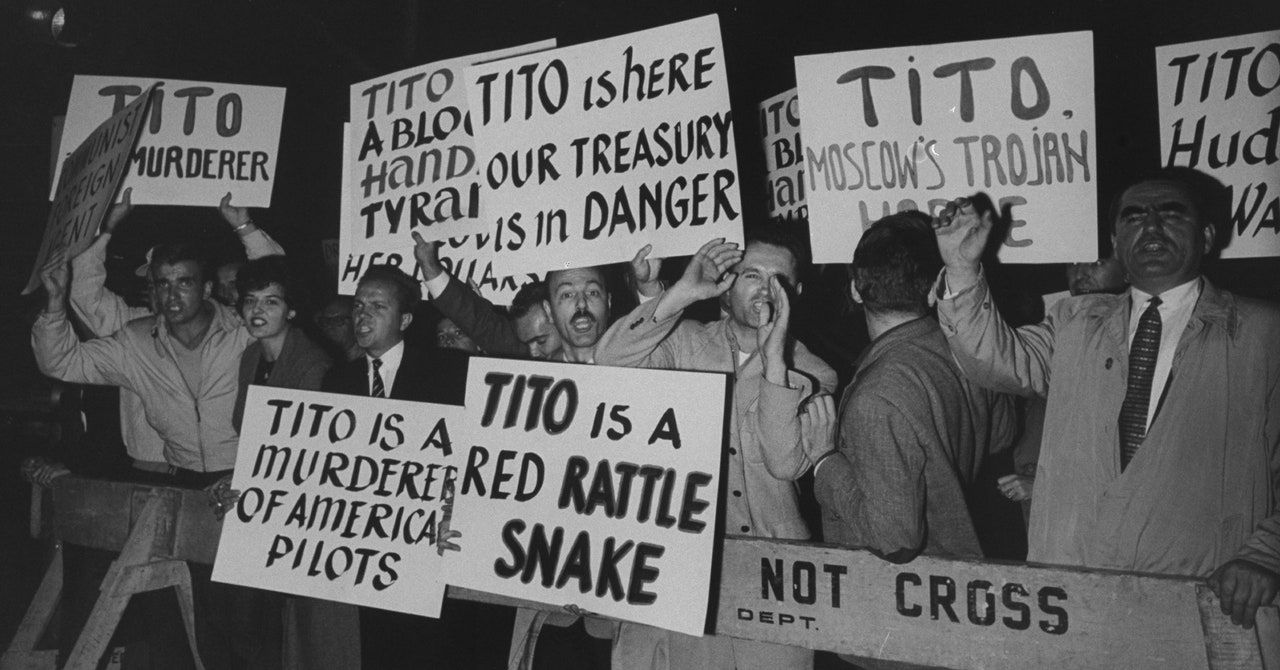
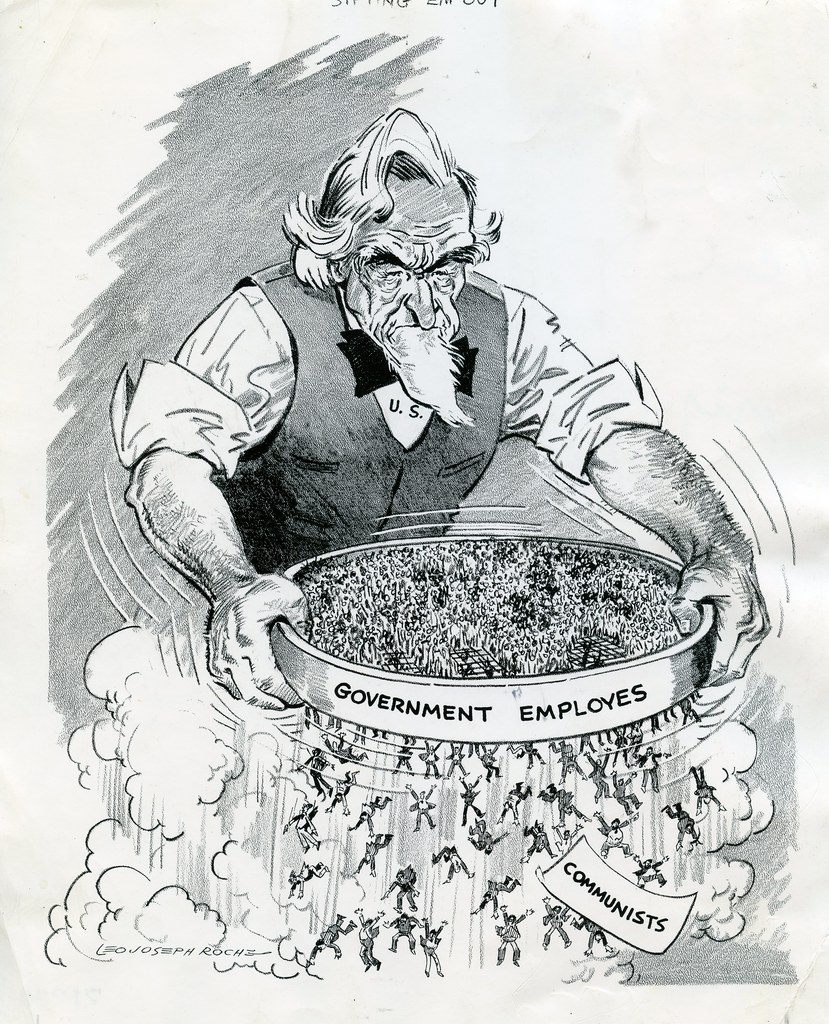
The second period, and what most people think about when they think of the Red Scare, was during a series of clashes with Soviet Russia post World War 2, known as the cold war. Due to the high tensions between the nations, there was paranoia in America that leftists and communists were working as Soviet spies, and were thus a threat to national security. This led to crackdowns, including President Truman’s passing of the Loyalty Order, which as the name suggests, mandated that every federal worker prove their loyalty to America.

How did this affect the people of America?
During the Red Scare, essentially every protest was either labeled as communist or anti-American. This also led the leaders of certain movements to be identified as communists, such as Martin Luther King Jr. Calling King, a communist. This also had the added effect of discrediting the civil rights movement. As if this wasn’t bad enough, you didn’t even have to be a political activist to be ousted, several Hollywood stars, for instance, were blacklisted from the industry to put a halt on alleged radicals. J. Robert Oppenheimer, theoretical physicist and Director of the Manhattan Project, was also called a communist. Essentially, nobody was safe from this label.
Yet those are just a few public figures, how did the Red Scare primarily affect your average, everyday American? Well, for one, the political climate became increasingly conservative, with both parties constantly disavowing the idea of communism. Few criticized the blatant repression of freedom of speech, the first amendment. Further, anyone who was a communist, or even was suspected to be a communist, was not given the same rights that a normal American citizen would otherwise be given.
Even then, there were many average, everyday Americans who were outed as communists, as well. The Red Scare Project generally describes that “Americans also endured the effects of the Red Scare on a personal level. With thousands of suspected communist sympathizers, their lives were destroyed. Scrutinized by law enforcement, subjugated from friends and family, and deliberately fired from their jobs, people’s lives were absolutely ruined. Although a small number of the accused may have held revolutionary ideals, the majority of others became victims of false allegations.”

How does it still affect politics?
Unsurprisingly, the political paradigm shift caused by the Red Scare didn’t just go away once the Cold War had ended, or by the 21st century. Indeed, being called a communist these days will have enough people believing you’re Stalin incarnate. The discourse from the Cold War has been passed on from generation to generation, and easily disproved falsehoods about communism are still pervasive in multiple facets of our society today. Take a high school economics class for example, what do you learn communism is? You might learn that it’s authoritarian, corrupt, or when the government controls every aspect of your life. According to Karl Marx, who knows quite a bit about the subject, communism is simply just a stateless, classless society.
Of course, people are not knowledgeable about that actual definition of communism, they hear the former version taught in their classes. The problem isn’t that the government isn’t giving people communist propaganda, the problem is that people aren’t taught the truth on the matter. People are taught to hate communism without understanding it. Political enemies will call each other communists to try to discredit them, (see Lindsey Graham's attacks of ‘the squad’). The squad is a group of democratic socialists, not communists or even socialists.
It’s not just the government either, corporate entities have an interest in convincing people that communism is when just the government does stuff (particularly to those corporations). Think about it this way, if you can convince enough people who already hate communism, that any regulation or tax against you is going to turn our country into the USSR, then you have a lot of people suddenly fighting for your interests. The University of Wollongong writes that “the propaganda disseminated to directly sell free enterprise was supported by that aimed at indirectly providing legitimacy to the inequalities it created and ensuring the compliance of workers in the capitalist system.”
How you can help
When you hear someone misidentify socialist or communist policies, it usually doesn’t help to correct them by telling them to ‘educate themselves.’ It usually makes that person more upset and less inclined to learn what communism is. Instead, in my experience, it works better to socratically work with them to discover why their conceptions are wrong. For instance, if someone says it’s communism to force people to wear a mask, ask why it isn’t to force people to wear seatbelts? Or to force people to attend jury duty? If they say those things are communism, ask if the U.S. is a communist nation for having those policies. If so, then why aren’t they working in a gulag or even allowed to say those things without the CIA knocking on their door? Continue until you’ve solved the problem, or decided it’s not worth it. Just remember people who have been victims of propaganda campaigns their whole life isn't necessarily dangerous or bad people. They’re just that; people.
Sources Cited:
“Red Scare.” History.com, A&E Television Networks, 1 June 2010, www.history.com/topics/cold-war/red-scare.
“U.S. Congress Passes Sedition Act.” History.com, A&E Television Networks, 5 Nov. 2009, www.history.com/this-day-in-history/u-s-congress-passes-sedition-act.
“Oppenheimer Security Hearing.” Atomic Heritage Foundation, 7 July 2014, www.atomicheritage.org/history/oppenheimer-security-hearing.
Martinez, Rudy, et al. “Impacts.” THE RED SCARE, 2015, redscareproject2015.weebly.com/impacts.html.
“Classless Society.” Encyclopædia Britannica, Encyclopædia Britannica, Inc., www.britannica.com/topic/classless-society.
Cole, Devan. “Graham Declines to Condemn Racist Trump Tweets and Calls Democratic Congresswomen 'a Bunch of Communists'.” CNN, Cable News Network, 16 July 2019, www.cnn.com/2019/07/15/politics/lindsey-graham-communists-democratic-congresswomen/index.html.
Beder, Sharon. “Corporate Propaganda and Global Capitalism - Selling Free Enterprise? .” University of Wollongong Research Online , University of Wollongong , 2005, ro.uow.edu.au/cgi/viewcontent.cgi?referer=www.google.com/&httpsredir=1&article=1042&context=artspapers&sei-redir=1.


Comments